
- 91
- 0
Hidden Health Hazards Your Shoppers Cannot See
Retail centres across the Sunshine Coast get busy once school holidays and end of financial year sales roll around. Change rooms are full, food courts are packed, and people move quickly from store to store. On the surface everything can look clean, but that does not always mean it is hygienic.
High-touch and high-moisture areas can hold on to bacteria, viruses, mould and allergens even when they look fine to the naked eye. Shoppers and staff touch the same handles, seats and pay terminals over and over, which quietly lifts the hygiene risk. When these risks are not managed well, centres can see more complaints, bad odours, and in some cases illness that people connect with their visit.
This is where a planned approach to cleaning makes a real difference. With the right retail cleaning services in Sunshine Coast, centre managers and retailers can protect their brand, their people and their bottom line without getting in the way of daily trade.
Change Rooms, Small Spaces with Big Hygiene Risks
Change rooms feel private, but from a hygiene point of view they are very shared spaces. Many touchpoints sit close together, and most of them are touched with bare hands, bare feet or clothing.
Common hotspots in retail change rooms include:
- Door and cubicle handles
- Curtains, hooks and shared hangers
- Benches, ottomans and stools
- Mirrors, light switches and payment terminals nearby
Fabric curtains and soft seating soak up more than most people realise. They can trap sweat, skin cells, body spray, perfume and make-up. Over time this can lead to musty smells and poor air quality, even when the floor looks clean. During busy sales periods people try on more outfits, stay in the cubicle longer and handle more stock, which all adds to the load on these surfaces.
Floors are another quiet problem area. They catch:
- Dirt and sand from shoes
- Moisture from wet footwear and bags
- Traces of outdoor contaminants that can transfer onto clothing and shopping bags
In small change rooms with limited airflow, aerosols from coughing, sneezing or spraying deodorant linger longer than many people expect. If cleaning teams re-use the same cloths or mop heads across cubicles or move straight from toilets to change areas without changing tools, they can spread contamination instead of removing it.
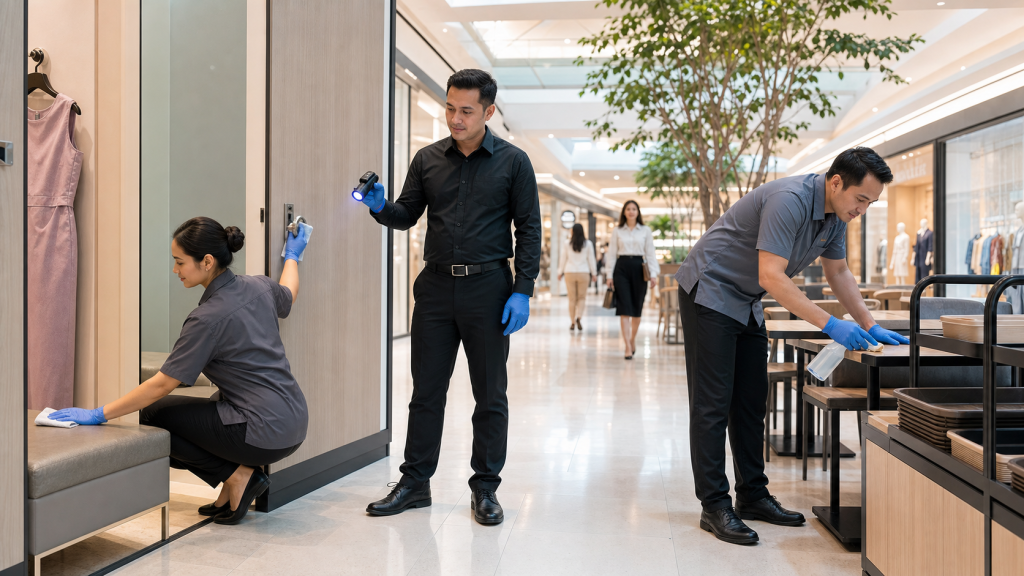
Effective change room cleaning needs more than a quick wipe of the mirror. A safe program should include:
- Targeted disinfection of frequent touchpoints with suitable commercial products
- Planned deep cleaning of curtains and soft furnishings
- Regular odour control and basic air quality checks
- Cleaning schedules that work around trade, late nights and weekend peaks
Experienced retail cleaning services in Sunshine Coast understand that these small rooms can have a big impact on how shoppers feel about a store.
Food Courts, Where Hygiene Meets Public Health
Food courts look open and airy, but they concentrate food, people and waste in one shared zone. A missed spill or rushed clean can affect not just one table, but the whole area around it.
High-risk food court touchpoints include:
- Tables, chair backs and armrests
- Tray return points and shared trays
- Self-serve drink stations and condiment bars
- EFTPOS terminals, hand rails and bin lids
- Highchairs and booster seats
Quick wipe-downs with one cloth might make a table look clear, but they can also spread bacteria and food allergens from one surface to the next. Traces of meat, dairy or nuts can move across several tables before the cloth is rinsed or changed. This is a bigger issue in spaces used by young children, older visitors and anyone with a weaker immune system.
Back-of-house areas play a quiet but strong role in what diners see and smell in the food court. Spaces that need regular attention include:
- Cleaning storage rooms and mop sinks
- Waste rooms and loading docks
- Drains, grease-prone corners and staff change areas
Poor waste handling, overflowing bins or sticky floor drains can invite pests and create odours that drift into dining zones. If it is not clear which tasks sit with tenants, centre management or contractors, some areas simply do not get cleaned as often as they should.
Strong hygiene in food courts supports:
- Compliance with food safety expectations and audits
- Positive tenancy relationships and clear lease conditions
- Longer dwell time, higher average spend and better online feedback
Providers that know retail cleaning services in Sunshine Coast are also familiar with local council expectations, tourism peaks and busy trade periods, so they can match cleaning effort to real risk.
Seasonal Spikes, School Holidays, Flu Season and Events
When the calendar hits school holidays, major events or EOFY sales, shopping centres feel different. Longer trading hours, bigger crowds and more shared meals mean more contact with change rooms and food courts.
At these times:
- People stay indoors in centres for longer stretches
- Flu and other seasonal bugs spread more easily in shared spaces
- Shoppers handle more garments and spend more time in change rooms
Standard daily routines that work fine in quiet weeks might not keep up during peak periods. Surfaces get dirtier faster, spills stay on the floor longer, and full bins turn into complaints before anyone has time to respond.
To keep up with this extra pressure, many centres add:
- Higher cleaning frequency around meal times
- Roving hygiene attendants to focus on tables and change rooms
- Short micro-cleans between peak bursts rather than one long clean at the end
Visible cleaning makes a real difference to how safe people feel. When shoppers see clean tables, stocked sanitiser stations and fresh-smelling change rooms, they are more likely to relax and stay longer. Working with a local Sunshine Coast team also means cleaning schedules can change quickly if the weather shifts, a big event is announced, or there is a spike in illness in the community.
Choosing the Right Retail Cleaning Partner
Not all commercial cleaning teams are set up for the special demands of retail centres, change rooms and food courts. The right partner should be able to show clear systems, reliable people and a local understanding of the area.
Things to look for include:
- Proven experience with retail facilities and similar sites
- Police-checked staff and insured operations
- Clear, written service agreements and scope of work
- Site-specific risk assessments so nothing important is missed
- Regular quality checks and simple reporting for centre managers
Good providers build tailored programs rather than one-size-fits-all plans. For most centres that means separate schedules and checklists for:
- Front-of-house areas like food courts, entries and change rooms
- Back-of-house loading docks, storage and staff areas
- Shared amenities such as washrooms and parents’ rooms
Periodic maintenance can also be folded into the plan. This might include deep cleaning of grout and tiles, floor scrubbing, upholstery cleaning and focused odour control to protect building finishes over time. Local retail cleaning services in Sunshine Coast can arrange after-hours work, early starts and fast responses to spills or incidents so hygiene stays strong without disrupting trade.
When retail centres put hygiene on the same level as security and maintenance, tenants feel supported and customers notice the difference. Consistent, professional cleaning protects surfaces, supports brand reputation and helps make hidden hygiene risks in change rooms and food courts far easier to manage.
Get Started With Your Project Today
If you want your store to consistently look its best for customers and staff, our team at B2B Commercial Cleaning is ready to help. Explore our tailored retail cleaning services in Sunshine Coast and discover how we can support your business with reliable, professional cleaning. Tell us about your premises and schedule, and we will recommend a practical solution that fits your operations. To discuss your needs or request a quote, simply contact us today.


