
- July 22, 2026
- in Commercial Cleaning
- by RAI
- 18
- 0
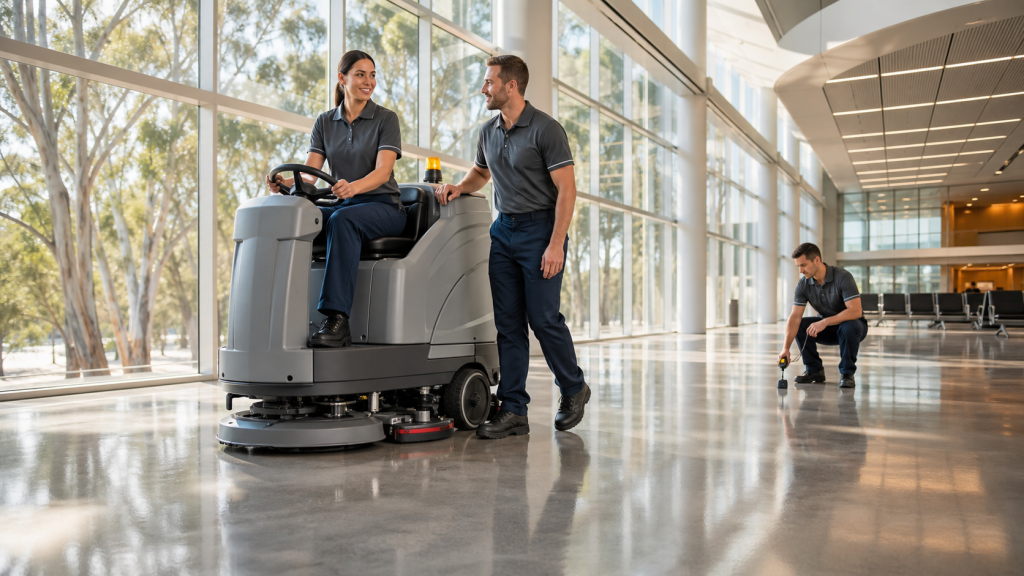
Hard floors do a lot of heavy lifting in Australian facilities. They carry people, trolleys, equipment and everyday mess, especially through late winter when rain, mud and debris are common. When those floors are not cleaned the right way, safety, hygiene and your brand image can all take a hit.
Many sites still rely on a simple mop and bucket. It feels quick and familiar, but it often just spreads dirty water around, leaves residue behind and can slowly damage modern floor finishes. To protect staff, visitors and your asset, hard floor cleaning in Australia needs to be seen as a strategic part of facility management, not a basic chore.
As a facility manager, you are juggling risk, compliance, presentation and budgets. Rethinking how your floors are cleaned can support all four. With the right methods and schedule, floors stay safer, look better and last longer, even in high-traffic winter conditions.
A floor can look fine at a glance and still be a risk. In busy areas like lobbies, corridors, lifts and amenities, winter brings extra moisture, grit and grime through the door. If this build-up is not removed properly, it creates a slippery film and micro-scratches that grab more dirt.
Some common issues include:
On top of this, there are hygiene concerns that a quick mop cannot fix. Biofilm, bacteria and viral particles can linger on porous or textured surfaces, especially in amenities, healthcare spaces and food-adjacent areas. Traditional mopping often pushes contaminants into grout lines and tiny pits in the surface, where they are harder to remove.
There is also the impact on your professional image. Dull, streaky or patchy floors send the wrong message in:
People notice when floors look tired or dirty. Even if the rest of the facility is well maintained, poor floors weaken trust in your cleaning standards and overall operation.
Wet mopping used to be the default. Now there are smarter options that actually remove soil instead of just moving it around. When we talk about modern hard floor cleaning in Australia, we are usually looking at a mix of:
These methods use controlled water and chemistry, then recover the dirty solution rather than leaving it on the floor. That means better hygiene, fewer streaks and faster drying times.
Just as important is matching the method to the floor type. Different surfaces need different chemistry, dwell times and pads or brushes. For example:
Safety and compliance also matter. Low-slip products, correct placement of warning signs and fast-drying processes all help keep traffic flowing while you clean, especially during peak winter trading or visiting hours.
Floors are a major asset. Replacing them is disruptive, time-consuming and expensive. A planned maintenance approach protects that investment and spreads wear evenly.
A good program usually covers three levels:
When floors are cared for in this structured way, there is less need for aggressive strip and seal processes or early replacement. You also support manufacturer recommendations by avoiding harsh chemicals, over-wetting and incorrect pads that can void warranties or shorten the life of a surface.
Clean, well-maintained floors can also help reduce:
For large Australian sites, even small improvements in floor condition and safety can add up over time in lower risk and better asset performance.
No two facilities are the same. A hospital, a school, a shopping centre and a logistics hub all have different traffic patterns, risk profiles and cleaning pressures. Hard floor cleaning in Australia works best when it is tailored, not copied from a generic checklist.
Key factors that shape a cleaning program include:
Our climate adds another layer. Across Australian sites, we often see:
These conditions influence the choice of tools, machinery, chemicals and cleaning frequency. Working with a specialist provider means you can audit current practices, identify gaps and build a program that matches your site, not someone else’s.
Hard floors do not have to be a headache. With the right approach, they can support safety, hygiene and your brand, while protecting your long-term budget. Late winter is a good time for facility managers to pause and review how floors are really performing before the busy spring period.
A simple starting checklist can include:
As an Australian-owned provider, we at B2B Commercial Cleaning work with facilities across the country that deal with these same challenges every day. By taking a more strategic view of hard floor cleaning in Australia, you can turn your floors into a genuine asset, keeping them safer, cleaner and looking better for longer, no matter how busy the site or how wet the season.
If your business floors are dulled, stained or hard to keep clean, we can help restore a professional finish that lasts. Explore our specialised hard floor cleaning in Australia to see how B2B Commercial Cleaning maintains safe, presentable surfaces across a wide range of commercial spaces. We will work with you to tailor a schedule and method that suits your building, budget and trading hours. To discuss your needs or request a quote, simply contact us.


