
- August 3, 2026
- in Commercial Cleaning
- by RAI
- 7
- 0
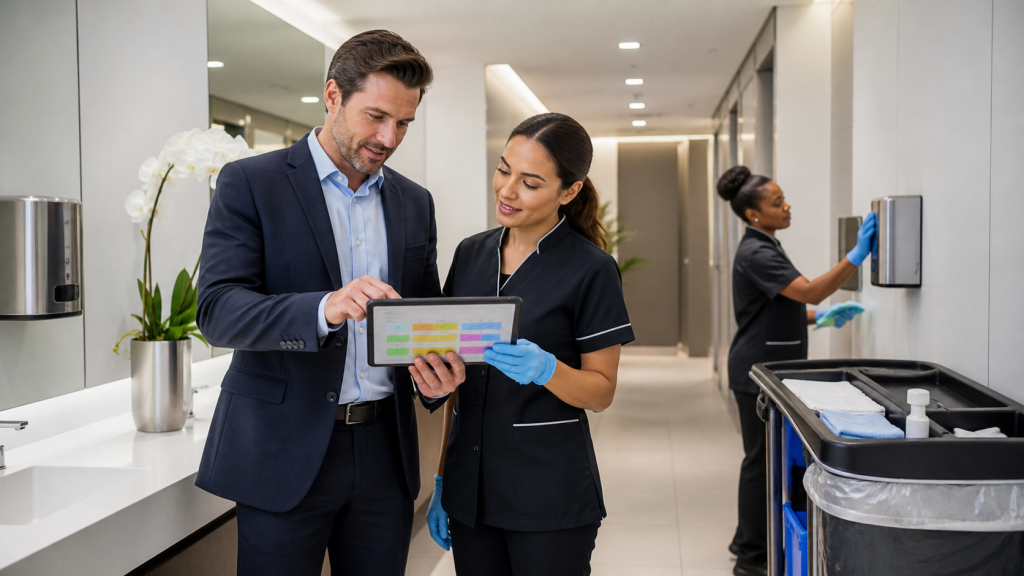
Washrooms quietly shape how people feel about a building. If the toilets are clean, stocked and smell fresh, tenants and staff tend to feel the whole facility is under control. When they are not, complaints spike, trust drops and the rest of your hard work can be forgotten very quickly.
This pressure ramps up in late winter, when colds and flu are doing the rounds and everyone is more alert to hygiene. A missed clean or an empty soap dispenser suddenly feels bigger than a small slip. Poorly planned washroom hygiene services can undo an otherwise well-run asset, leading to odours, grubby touchpoints and more sick days.
The good news is that washrooms can be managed with the same clear thinking you apply to lifts, HVAC or security. With strategic, data-led hygiene planning, and support from a consistent national provider like B2B Commercial Cleaning, washrooms can support health, comfort and compliance across high-traffic sites.
Good washroom hygiene is more than a quick mop and a bin empty. Modern users expect a space that feels clean, smells neutral and supports proper hand hygiene every time they visit.
Strong washroom hygiene services usually cover things like:
For facility managers, it helps to set measurable standards with your provider. You can agree on:
In Australia, workplace health and safety expectations sit in the background of all of this. Offices, retail centres, schools and healthcare sites all need washrooms that are fit for purpose. That means they should reduce obvious health risks, support personal hygiene and be serviced in a way that protects both building users and cleaning staff.
A smart washroom plan starts with understanding how your facilities are actually used. Not all floors, tenancies or buildings behave the same, even within one portfolio.
Usage mapping can include:
Once you know when and where pressure is highest, you can design scalable service schedules. That might look like more frequent touchpoint cleaning during the day, routine deep cleans after hours and clear protocols for rapid response when there is a spill, leak or blockage.
Consumable top-ups should follow the same logic. High-traffic washrooms might need several checks a day, while quieter levels can be serviced less often without risking stock-outs or complaints.
Product choices also matter. Facility managers can reduce waste and touchpoints by working with suppliers on:
For multi-site portfolios, there is real value in having consistent washroom hygiene services across the board. A single Australian-owned provider with national reach can help you standardise hygiene outcomes, while still adjusting plans to match each building, tenancy mix and climate.
Service transparency is key. Facility managers should expect:
Risk and continuity planning is just as important, especially through winter when teams can be hit by illness and demand can jump. A capable provider will have vetted and trained staff, backup teams where possible and reliable product supply chains so that soap, paper and hygiene units do not run out at the worst moment.
When these pieces are in place, you spend less time chasing issues and more time managing the bigger picture of your facilities.
Saving money on washroom hygiene is not about stripping back services until people are unhappy. It is about looking at the total cost of ownership and finding smarter ways to maintain standards.
A broader view of cost can include:
Usage data is a big help here. When you know your seasonal patterns, you can right-size consumable orders. For example, you might increase soap and sanitiser in late winter, then reset to a baseline at other times. This helps avoid both frustrating stock-outs and storerooms full of unused product.
Quarterly service reviews can also keep things on track. Together with your provider, you can:
Small, data-led tweaks like this protect hygiene standards while keeping the service aligned with how the building is actually being used.
Australian winters bring their own washroom challenges. People move indoors, viruses spread more easily and wet weather tracks water and dirt through entries, change rooms and end-of-trip areas.
To stay ahead, facility managers can work with their provider on targeted winter upgrades, such as:
Communication also matters. When people can see cleaners on site, read clear hygiene messages and experience quick responses to issues, confidence grows. Staff and tenants feel that their wellbeing is being taken seriously, which supports smoother operations across the whole facility.
Well-managed washroom hygiene services do more than keep toilets clean. They support tenant retention, lift the perceived quality of the asset, help keep workplaces safer and reduce the risk of health-related disruptions. For facility managers across Australia, they are a quiet but powerful lever.
A simple action checklist might be:
When washrooms move from a reactive headache to a planned, data-led service, they stop dragging on your time and reputation. Instead, they become a steady, strategic part of a building that people trust and appreciate every single day.
A clean, well-stocked washroom is essential for the health, comfort and confidence of everyone who uses your facilities. At B2B Commercial Cleaning, we provide tailored washroom hygiene services that fit your building, budget and compliance needs. If you are ready to improve hygiene standards and reduce complaints, get in touch so we can discuss a practical plan for your site. Simply contact us and we will arrange a prompt, obligation-free consultation.


