
- August 3, 2026
- in Commercial Cleaning
- by RAI
- 8
- 0
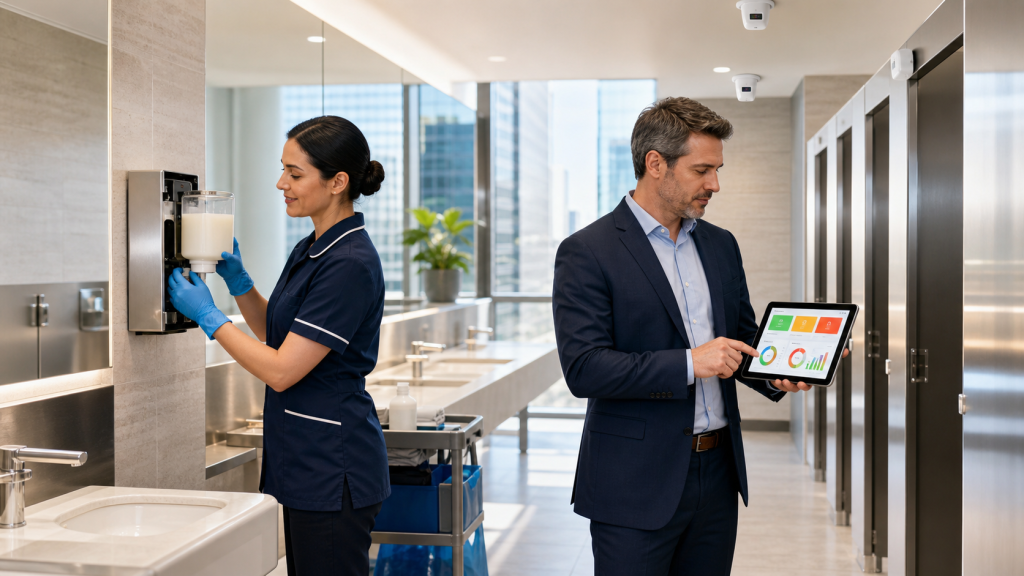
High-traffic washrooms can make or break the experience of a shopping trip, hospital visit, lecture day or a big sports event. When usage spikes, even a well-run site can struggle with odours, spills and empty dispensers, which quickly turn into complaints and higher health risks. Facilities teams are often left reacting instead of controlling what is happening in each washroom, especially across a large portfolio of sites.
Smart washroom hygiene services change that pattern. By using IoT sensors, data-led cleaning schedules and clear hygiene measurements, washrooms shift from a constant stress point into a managed asset. In this article, we will walk through how this works in real life, and how facilities managers, property teams and operations leaders can get better outcomes without simply throwing more labour at the problem.
During peak trading, flu season or major events, washrooms work hard. Queues build, cubicles flip constantly and dispensers are pushed to their limits. Even strong cleaning teams can struggle to keep up when traffic does not follow the roster.
Smart washroom hygiene services use three building blocks to keep control in these moments:
For facility leaders, this approach supports a stronger business case. It helps to lift the user experience, reduce complaints, support better health outcomes, and give clearer reporting to executive teams and risk committees, all while respecting tight labour and cleaning budgets.
Fixed cleaning and restocking schedules work only when usage is predictable, and that is rarely true in high-traffic environments such as:
When winter illnesses spread or large events land, traffic patterns shift fast. Staff may be away sick, and the same roster that worked last month suddenly leaves some washrooms over-serviced and others under pressure. Cleaning by the clock often means a quiet level gets a full service while a ground floor washroom hits empty soap and full bins long before the next scheduled visit.
Most teams are also working with a measurement gap. They rely on:
Without data, it is difficult to justify staffing levels, adjust service scopes or show national stakeholders that hygiene is being controlled, especially during flu-heavy periods when expectations rise.
Smart washroom hygiene starts with simple IoT components that quietly watch what is happening in each space:
These devices provide real-time visibility of how each washroom is being used. From there, analytics turn raw counts into insight, such as:
For example, a sudden spike in visits to one washroom might signal an event, a blockage in nearby facilities or even rising vandalism risk. Smart services pair these insights with service delivery. At B2B Commercial Cleaning, that means:
This closed-loop helps make sure every alert leads to a response, and every response is recorded.
Once washroom usage is measured accurately, cleaning and restocking can be planned around what is really happening, instead of guesswork. Usage-based triggers can replace fixed rounds, such as:
During busy periods, such as winter illness waves or big sporting events, thresholds can be tightened and hours extended. During quieter times, the same system helps avoid over-servicing, which reduces wasted labour and disruption.
Consumable data also supports smarter stock control across a portfolio. Facilities teams can:
For national or regional operations, this creates new options. Central teams can compare like-for-like sites, shift labour toward hotspots, and try different products or frequencies, then see, in data, what actually works.
Smart washroom hygiene is not just about responding faster, it is also about proving that cleaning is effective. Objective measurements help close that loop, including:
When IoT usage data, cleaning logs and testing results are combined, they tell a clear story. You can see whether increased traffic during winter led to more odour incidents, or if adjusted cleaning frequencies kept complaint levels steady. You can compare ATP scores across different branches or campuses to confirm that standards are consistent, not just assumed.
For Australian businesses, this level of evidence supports:
All of this is presented in simple dashboards and reports that non-technical stakeholders can follow easily.
The most successful smart washroom projects start small, then scale. Typical steps for facilities and operations leaders include:
From there, smart hygiene can be rolled out using standard templates and KPIs across states, regions or business units. Practical outcomes might include:
As an Australian-owned provider focused on commercial cleaning, periodic maintenance and washroom supply services, B2B Commercial Cleaning is well placed to design and manage this type of solution across a mix of busy facilities. We understand local traffic patterns, public expectations and seasonal pressures, and we work with teams to make smart washroom hygiene part of normal operations, not an extra project that sits off to the side.
A clean, well-stocked washroom speaks volumes about how you value staff and visitors, and at B2B Commercial Cleaning we make that standard easy to maintain. Our tailored washroom hygiene services help reduce germs, odours and complaints while presenting a consistently professional image. If you are ready to lift your hygiene standards, get in touch through our contact page and we will recommend a practical schedule that suits your workplace and budget.


