
- July 8, 2026
- in Commercial Cleaning
- by RAI
- 57
- 0
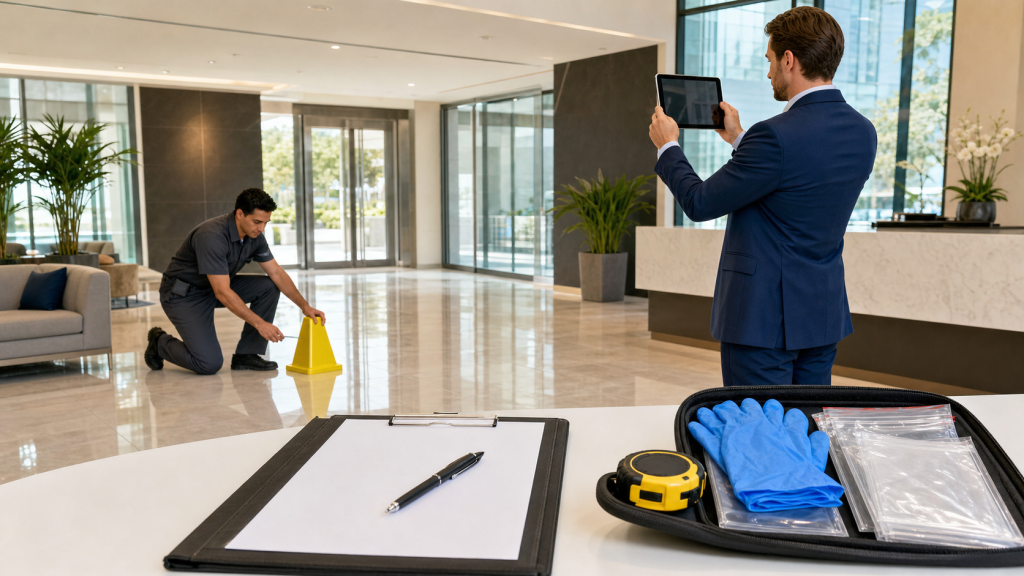
Slip, trip, and fall incidents can turn a normal day in your facility into a serious problem very fast. For Australian facility managers, especially in wet winter months, floor safety is not just about looking tidy; it is a core part of WHS and risk management.
Good documentation is one of your strongest tools. When your records are clear, consistent and audit-ready, you can show that you took reasonable steps to keep people safe. That can reduce slip claims, lower insurance pressure and limit legal exposure when something goes wrong.
Professional floor maintenance services also play a big part here. When cleaning schedules, inspection results and floor condition reports are managed by trained teams, you gain defensible evidence of due diligence. This matters in high-traffic sites like shopping centres, offices, warehouses, healthcare and education facilities, where weather, heavy foot traffic and everyday contaminants increase slip risk if not managed early and often.
The best time to think about a slip claim is before it ever happens. A strong paper trail shows that you planned, checked and acted on floor safety.
Key parts of a preventative documentation system include:
Digital tools make this easier. Standardised checklists, time-stamped task records and photo evidence help you prove that checks were done when you say they were. A quick photo of an entry mat placement or a freshly mopped area with signage can make a big difference when a claim is reviewed.
To keep your records useful, link them to Australian Standards and insurer expectations. That means:
In winter, add some targeted documents, such as:
These small details help show that your controls were adjusted for real conditions, not just set and forgotten.
Even with strong prevention, slips can still occur. How you respond in the first few minutes and hours can shape the outcome for the injured person and for your organisation.
A simple incident response protocol might look like this:
A calm, respectful response matters. When your team follows clear forms and steps, it is easier to support the injured person and avoid confusion or mixed messages that can increase reputational and legal risk.
Your incident report should capture more than just a name and time. Useful details include:
Close collaboration with your floor maintenance services provider helps here too. They can quickly confirm cleaning times, products used, machine operation and any recent treatments. That independent record often carries a lot of weight when a claim is reviewed by insurers or legal teams.
Your everyday cleaning work can be more than housekeeping. With the right structure, it becomes a powerful audit trail that shows consistent care and control.
Think about how you document:
Working with professional floor maintenance services, you can set service level agreements that are clear and measurable. For example, you might agree on inspection frequencies, floor maintenance methods for each surface type and target response times for spills. When these are written down and tracked, you have strong evidence that your system is not just words on paper.
Product selection also matters. Records should show:
In winter, add some seasonal strategies, such as:
When you treat each of these steps as a documented decision, you build a clear story of thoughtful risk control.
When a slip claim lands on a desk, insurers, lawyers and regulators tend to look for the same things. They want to see:
An internal audit routine helps keep all of this in line. Many facility managers find value in a simple cycle: review cleaning logs every quarter, run spot checks on contractor performance, and verify that any flagged floor issues were fixed and recorded.
Bringing all your information together is another smart move. When incident reports, cleaning schedules and floor maintenance service records sit in one central system, audits become faster and less stressful. You can quickly pull up the full history of an area, show patterns of care and respond clearly to questions in a dispute.
There is also a commercial upside. Strong audit trails can support better discussions with insurers, reduce the number of disputed claims and give you better benchmarks across multiple sites. For large national portfolios, that clarity is especially useful.
Turning this into action does not have to be complicated. Start by mapping your high-risk zones, such as entries, stairs, ramps, bathrooms and food areas. Formalise cleaning and maintenance schedules for each space, then tighten your incident response forms so they collect the right details every time.
Next, centralise your documentation so it is easy to find when you need it. This includes risk assessments, floor condition audits, daily cleaning records, contractor inductions, training logs and incident reports. Aim for a system that is simple enough for your team to use every day, but detailed enough to stand up in an audit.
Partnering with a trusted national provider of commercial and industrial cleaning, washroom supplies and periodic maintenance services can make this process smoother. An experienced team can tailor floor maintenance services, documentation templates and reporting frameworks to the specific needs of your sites across Australia. A winter-ready slip risk and documentation review is a practical way to spot gaps in your current processes, training and audit trails, then build a playbook that helps stop slips before they start.
If you are ready to improve safety, appearance and longevity across your facility’s floors, we are here to help. At B2B Commercial Cleaning, our specialised floor maintenance services are tailored to the needs of busy commercial spaces across Australia. Share your requirements with us so we can recommend a practical, cost-effective plan that fits your schedule and operations. To discuss a quote or book a site visit, simply contact us today.


