
- June 29, 2026
- in Commercial Cleaning
- by RAI
- 86
- 0
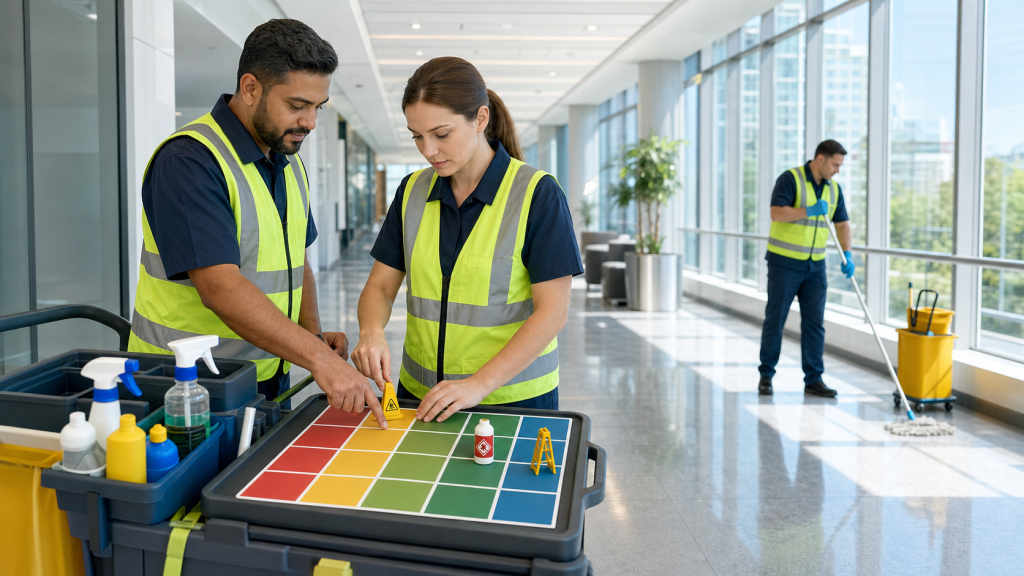
Good cleaning is not just about a space looking tidy. It is about keeping people safe every single day. For busy Sunshine Coast and North Brisbane workplaces, a simple tick-box cleaning checklist is not enough to manage real-world risks.
Offices, medical centres, schools, hospitality venues and strata sites all have different hazards. Slippery entry tiles, strong cleaning chemicals, shared touch points, change rooms and car parks all bring their own risks. A practical facility risk assessment matrix helps you see those risks clearly, instead of guessing.
By mapping likelihood versus consequence for incidents like slips, chemical exposure and infection spread, decision-makers can sort what needs attention first. That way, cleaning tasks, schedules and controls are focused where they matter most. As a local team working in high-traffic facilities, we see how this approach supports safer workplaces through the busy visitor periods and when flu and other viruses are going around.
Before a matrix makes sense, the language needs to be simple and clear. Here are the basics in everyday terms.
Examples: wet tiles in a lobby, a used needle in a medical bin, mould on shower grout.
This is usually rated from rare, unlikely, possible, likely to almost certain.
This ranges from insignificant to minor, moderate, major or catastrophic.
The matrix itself is a simple grid. One axis shows likelihood from rare to almost certain. The other shows consequence from insignificant to catastrophic. Each box in the grid has a colour, for example:
A high-likelihood, high-consequence hazard will sit in the red zone. That tells you it needs stronger controls, closer checks and often more frequent cleaning.
It is also important to remember that not every area in a building has the same risk. Different zones need their own ratings, such as:
When each zone has its own risk picture, you can plan cleaning and safety controls that actually match how that space is used.
Our local climate and lifestyle bring some special cleaning challenges. High foot traffic from visitors, busy school terms and long days in shared spaces all add to the risk mix.
During busier seasons, you often see:
Sunshine Coast workplaces also deal with local factors such as sandy floors from beach visits. Sand can act like tiny ball bearings on hard floors, which raises slip risk if it is not removed often. Humidity can help mould grow in bathrooms, showers and poorly ventilated areas. Outdoor walkways and ramps can become very slippery after rain, especially where algae has started to grow.
Professional commercial cleaners in Sunshine Coast settings are often the first to spot hazards like:
When these issues are fed back into the risk matrix, the site can update its ratings and controls so small problems do not turn into serious incidents.
Once risks are mapped, you need strong controls. Three of the most practical tools are PPE, signage and SOPs.
Personal Protective Equipment (PPE) helps protect cleaners from direct exposure. Common PPE includes:
Each item should match a specific hazard. For example, strong chemical use without eye protection pushes the risk rating up, while using the right PPE brings the likelihood and consequence down.
Signage and barriers warn others about temporary hazards while cleaning is carried out. Good practice includes:
Standard Operating Procedures, or SOPs, are written methods that explain the safest way to do each task. Useful SOPs can cover:
When cleaners follow clear SOPs, the likelihood of mistakes drops and people across the site know what to expect from the cleaning process.
A risk matrix only has value if it shapes the daily cleaning routine. The aim is to turn that colour-coded grid into a clear, workable plan.
A practical approach is to:
Staff training ties it all together. Toolbox talks and on-the-job coaching can cover:
Risk matrices are not meant to sit in a folder and gather dust. When a near miss, incident, audit finding or change to layout happens, it is a sign to review the matrix. For example, adding new workstations, changing a tenancy or opening a new entrance can shift traffic and create different slip patterns.
Experienced commercial cleaners in Sunshine Coast workplaces can help facility managers walk the site with fresh eyes, update risk scores and tweak cleaning routines so they stay in step with how the facility is really used.
Reviewing your cleaning risk plans before the next busy visitor period or flu wave hits can make a real difference. A short walk-through with a simple matrix often reveals the top five high-consequence risks very quickly, such as main entry slips, bathroom hygiene, chemical storage, stairwell cleaning and waste handling.
From there, check that PPE, signage and SOPs are clear and actually used for each of those high-priority items. When the risk matrix and the daily cleaning routine line up, your staff, visitors and contractors all move through a safer, cleaner facility.
If you are ready to create a safer, more presentable workplace, our team at B2B Commercial Cleaning is here to help with tailored solutions for your site and schedule. Explore how our commercial cleaners in Sunshine Coast can support your office, warehouse or commercial premises with consistent, high-quality results. We work closely with you to understand your priorities, from hygiene and compliance through to first impressions for staff and clients. To discuss a customised cleaning plan or request a quote, simply contact us today.


